
21 popular misconceptions about digital transformation (Part II: #08 – #14)
SMEs are easily confused on what digital transformation means and how it can help them to stay competitive. Hype, misuse and shortcuts lead to common misconceptions. We have compiled a summary of the 21 most popular and are sharing those in 3 blog-posts. Here are the second seven:
8. Quick fix
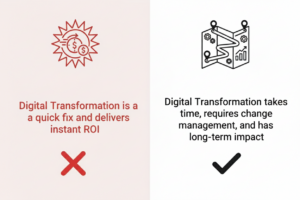
If you’re expecting Digital Transformation to deliver instant ROI, you’re not transforming — you’re just upgrading software.
Why this misconception is dangerous:
- Companies rush into tech investments expecting immediate results.
- They ignore people, processes, and culture — the core drivers of transformation.
- The outcome? Abandoned systems, frustrated employees, and “failed transformation” headlines.
Here’s the truth:
Digital Transformation is a strategic shift. It changes how a business operates, how decisions are made, and how value is delivered. That doesn’t happen overnight.
What successful companies do differently:
1. Prepare people — communicate the “why”, train teams, and address fears.
2. Redesign processes before digitizing them — don’t automate chaos.
3. Measure progress in phases — efficiency first, ROI later, long-term value always.
Transformation isn’t expensive — misalignment is.
👉 If you’re planning to transform now, start with expectations, not technology. Need a realistic roadmap or a change management plan? We’re happy to help
9. Investment
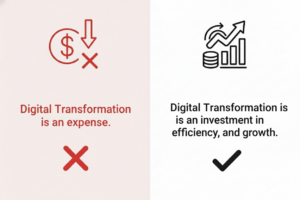
If you see Digital Transformation only as a cost, you’re missing its real value.
Too often, leaders look at Digital Transformation through the lens of cost control, new systems, software licenses…
But what if you reframed it as an investment in capability?
Here’s why that shift matters:
▶️ Efficiency: Automating manual processes frees people to focus on higher-value work.
▶️ Resilience: Data-driven decisions make your business faster and more adaptable.
▶️ Growth: Digital tools open new channels, customers, and revenue models.
When done right, every dollar spent on transformation compounds over time, reducing friction, unlocking innovation, and scaling your business smarter.
💡 You don’t spend on Digital Transformation. You invest into your company’s future.
10. Ownership
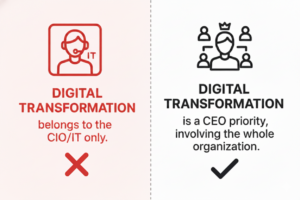
Digital Transformation is Everyone’s Job . Many organizations still see digital transformation as something the CIO or IT department “takes care of.”
It sounds logical; After all, it involves technology, right?
But that’s exactly where transformation efforts begin to fail!
Because technology alone doesn’t transform a business, people do.
Digital Transformation is a CEO priority, involving the entire organization.
True transformation requires a shared vision led by the CEO and embraced by every department.
– HR drives cultural change.
– Finance ensures sustainability.
– Operations streamline workflows.
– Marketing redefines customer experience.
It’s a collective journey – not a delegated task.
It’s about how aligned your entire organization is around it.
Is your business treating digital transformation as a shared strategic mission or just another IT project?
11. Replacement
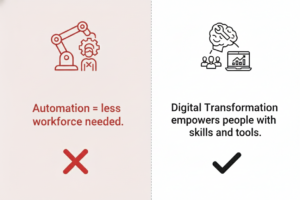
Automation isn’t primarily about replacing people; It’s about strengthening them!
One of the most common fears in digital transformation is this: “Automation will reduce the need for people.”
Well, it definitely can (and should!) reduce manual workload. It can lower operational cost.
But if cost-cutting is your only objective… you’re aiming far too low.
Because the real value of digital transformation isn’t found in shrinking your workforce, it’s found in elevating what your workforce can achieve.
When automation takes over repetitive tasks, your people gain something priceless: time, focus, and capability.
⬆️ They can innovate.
⬆️ They can serve customers better.
⬆️ They can sell more, create more, deliver more.
⬆️ They can move from low-value tasks to high-impact contributions.
Digital transformation should first drive top-line growth. Efficiency is simply a powerful byproduct.
Leaders who see automation as a workforce-reduction tool miss the strategic opportunity.
Leaders who use automation to unlock human potential win the long game.
12. Affordability
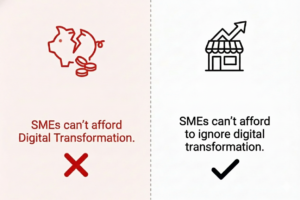
Many small and medium enterprises think: “SMEs can’t afford Digital Transformation.”
It sounds reasonable. Budgets are tight. Resources limited.
But here’s the reality:
SMEs can’t afford to ignore digital transformation.
Why? Because digital transformation isn’t just a cost, it’s a strategic investment.
Even small steps can:
- Streamline operations and save time
- Improve customer experience and retention
- Open new revenue opportunities
- Boost employee productivity and engagement
You don’t need a massive budget to start. Focus on high-impact, low-cost initiatives first, and grow your digital capabilities step by step.
Every day without digital is a day your competitors gain an edge. Start your digital journey now! Because the cost of waiting is far greater than the cost of acting.
13. Culture
It’s repetitive, but so important: Digital transformation isn’t just about technology, it’s about people.
The real game-changer? A shift in culture and mindset.
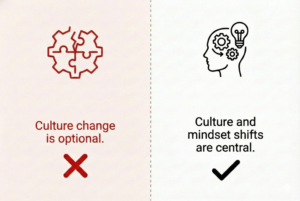
Too often, organizations treat culture change as optional, focusing solely on new tools or processes.
This is a mistake. Culture and mindset shifts are central to any successful digital transformation.
Our 7 Dimensions of Digital Transformation framework places Digital Leadership and Culture at the very top of the journey.
Teams that embrace change, foster innovation, and encourage continuous learning are the ones that thrive in a digital world.
Leadership must model the behaviors and values they want to see across the organization, inspiring others to follow.
Transformation is not a one-time project—it’s an ongoing journey where mindset matters every step of the way.
Ensure that culture and leadership are never overlooked.
14. Web/App
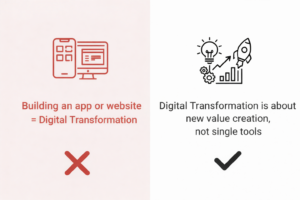
If building an app was Digital Transformation, most companies would already be transformed.
Yet many aren’t. Why? Because apps, websites, and platforms are tools – not transformation.
Too often, I still see initiatives that focus on:
- launching a new website
- building a customer app
- “modernising” the front end
…without changing how value is actually created in the business.
Value emerges when technology enables:
- new revenue models
- better customer outcomes
- faster, smarter processes
- differentiated products or services
How to move from tools to value creation
To overcome this misconception, shift the conversation:
- From “What should we build?” → “What value do we want to unlock?”
- From features → outcomes
- From one-off launches → continuous improvement
Start small, but start with value in mind:
- What problem does this solve?
- Who benefits, and how?
- How does this strengthen your competitive position?
Digital Transformation doesn’t happen when you launch an app.
It happens when your business creates new value because of digital capabilities.
More misconceptions about digital transformation (Part I: #01 – #07)
More misconceptions about digital transformation (Part III: #15 – #21)
